Chia V flax seed
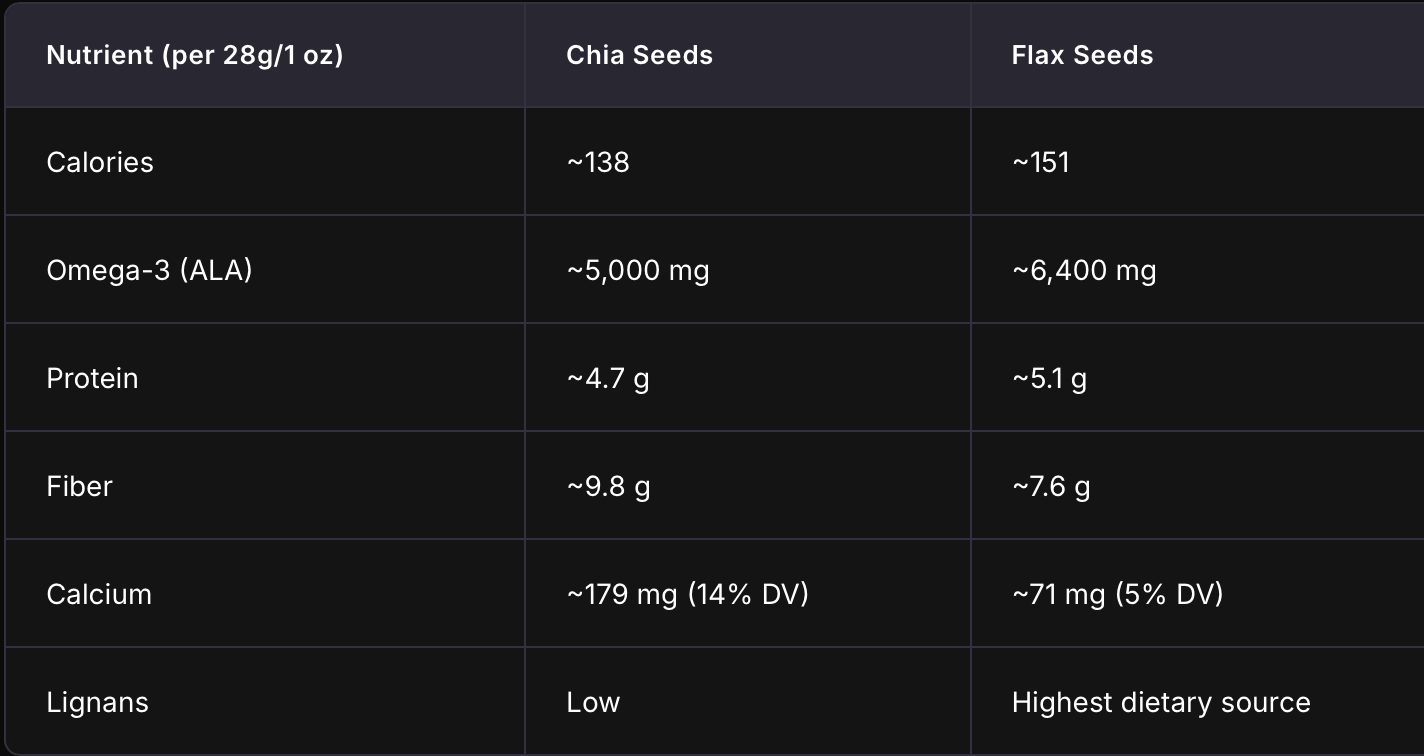
Both are excellent sources of alpha-linolenic acid (ALA), a plant-based omega-3 fatty acid, but flax contains significantly more. Flax is also the richest dietary source of lignans, a type of polyphenol with antioxidant properties — chia contains lignans too, but in much smaller amounts. Chia, on the other hand, wins on fiber and calcium content.
Physiological Effects
Chia seeds form a hydrophilic gel when mixed with water (due to their mucilaginous fiber), which slows digestion and promotes a feeling of satiety. Studies suggest chia may help regulate postprandial blood glucose and improve lipid profiles. Their high soluble fiber content also supports gut microbiome diversity and bowel regularity.
Flax seeds are particularly notable for their lignans, which are metabolized by gut bacteria into enterolignans (enterodiol and enterolactone). These compounds have weak phytoestrogenic activity and have been studied for their potential roles in reducing risk of cardiovascular disease and certain hormone-related cancers. Research has also linked flax consumption to reductions in LDL cholesterol and improvements in insulin sensitivity.
A critical practical note: flax seeds must be ground for the body to access their nutrients. Whole flax seeds pass through the digestive tract largely intact. Chia seeds, by contrast, are bioavailable in their whole form, making them somewhat more convenient.
Both seeds are valuable additions to a diet, and incorporating both provides complementary benefits — chia for hydration-friendly fiber and minerals, flax for omega-3 density and lignan richness.
For further reading, you can explore:
Harvard T.H. Chan School of Public Health: https://www.hsph.harvard.edu/nutritionsource/food-features/flaxseeds/
NIH Office of Dietary Supplements on Omega-3s: https://ods.od.nih.gov/factsheets/Omega3FattyAcids-Consumer/